
FUE
Hair transplant methods explained
FUE vs FUT: Which hair transplant method is right to explore?
Both methods move your own hair follicles from a donor area to areas affected by hair loss. The main difference is how those follicles are collected — and what that can mean for scarring, recovery and hairstyle preferences.
This guide is for education. A qualified clinician must assess your hair loss, donor area, health and goals before recommending a procedure.

FUEFollicular unit excision
FUTFollicular unit transplantation
PersonalizedAssessment-led planning
Start with the basics
What is the difference between FUE and FUT?
FUE and FUT are two ways of harvesting follicular units from the donor area. In either method, the selected grafts are then prepared and placed into the recipient area.
FUE · Individual extraction
Follicles are removed one by one.
With Follicular Unit Excision (FUE), a small punch instrument is used to remove individual follicular units from suitable donor areas, commonly at the back and sides of the scalp. This leaves multiple small dot scars rather than one continuous strip scar.
FUT · Strip harvesting
A strip is removed and dissected.
With Follicular Unit Transplantation (FUT), a narrow strip of scalp is surgically removed from the donor area. The strip is dissected under magnification into individual follicular units, and the donor wound is closed, leaving a linear scar.
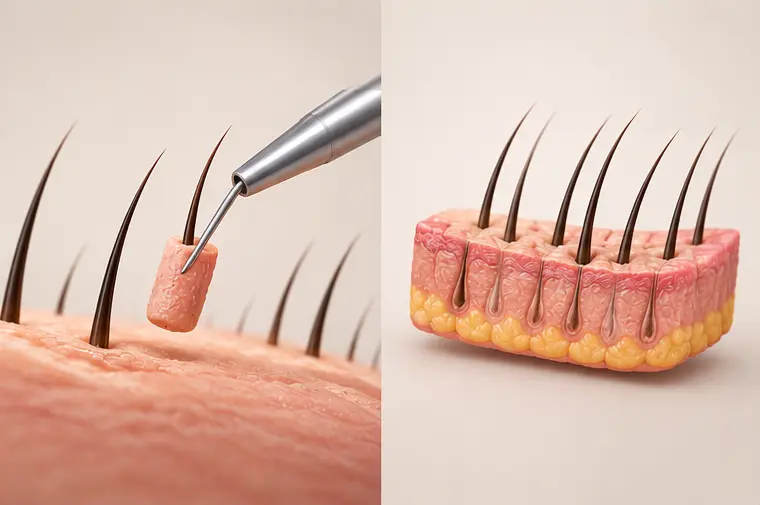
Side-by-side comparison
FUE vs FUT at a glance.
These are general differences, not a personal recommendation. Technique, surgeon experience, donor characteristics and the planned number of grafts all matter.
| Factor | FUE | FUT / Strip |
|---|---|---|
| How grafts are collected | Individual follicular units are removed one at a time using a small punch tool. | A strip of scalp is removed; follicular units are separated from it under magnification. |
| Donor-area scar pattern | Many small, scattered dot scars. They are not scar-free and visibility varies. | One linear scar along the donor area. Its appearance can vary with healing, closure technique and individual factors. |
| Hair length preferences | May be more compatible with very short hairstyles, although small dot scars can still be visible. | A longer hairstyle may help cover the linear scar; very short or shaved styles can make it more noticeable. |
| Donor-area closure | No long strip incision to close; each extraction site heals separately. | The strip-removal incision is closed with sutures or staples, depending on the surgeon's approach. |
| Recovery considerations | Often involves small extraction-site scabs and a recovery period that may be shorter than FUT. Individual recovery varies. | Includes healing of the linear incision and may involve more donor-area tightness or discomfort. Recovery varies. |
| Procedure time | Can be time-intensive because grafts are harvested individually. | Harvesting a strip can allow many grafts to be collected in a shorter harvesting period; total procedure time varies. |
| Cost | May cost more in some clinics because individual extraction can require more time and staffing. | May be less expensive in some settings. Actual pricing depends on the clinic, surgeon, graft plan and what is included. |
| Who may consider it | People who prefer to avoid a linear scar or who like to wear their hair short may wish to discuss FUE. | Some patients may discuss FUT when the surgeon believes strip harvesting suits their donor characteristics and goals. |
No method is best for everyone. The table describes common technique differences and should not replace a medical assessment.

Personalized clinical advice
Your donor area and goals matter.
A consultation gives the clinical team an opportunity to review your hair-loss pattern, donor characteristics, preferred hairstyle and expectations before discussing suitable options.
Donor-area appearance
How do FUE and FUT scars differ?
Both methods involve surgery and both leave scars. The pattern of scarring is different, and how noticeable it becomes depends on healing, hair characteristics and hairstyle.
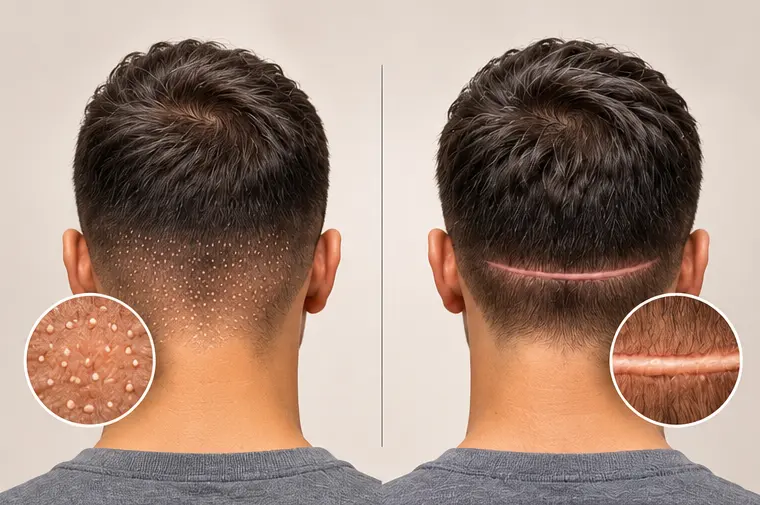
FUE creates multiple small circular extraction sites. Once healed, these can appear as tiny pale dots. They may be difficult to notice in some people, but can still be visible, particularly with very short hair or extensive extraction.
FUT / Strip
One linear scar
FUT leaves a linear scar where the strip was removed and the incision closed. Hair can often cover it when kept longer, but the line may be more apparent with short or shaved hairstyles. Scar width and healing differ from person to person.
Choosing what to discuss
What factors can influence the recommendation?
A method should be selected around your donor area, hair-loss pattern, preferences and the surgeon's assessment — not simply because one technique is more popular.
01 / DONOR AREA
Donor density and scalp laxity
Hair density, scalp flexibility, hair calibre and previous procedures can influence which harvesting options are appropriate.
02 / HAIRSTYLE
How short you wear your hair
If you prefer a very short or shaved style, ask how each scar pattern could look with your usual haircut.
03 / HAIR LOSS
Current and future pattern
Your current thinning, likely progression and long-term donor-hair needs should be part of treatment planning.
04 / GRAFT PLAN
Number of grafts needed
The size of the treatment area and the surgeon's safe donor-harvesting plan may affect the method and staging.
05 / RECOVERY
Work and daily routine
Discuss wound care, activity restrictions, time away from work and the specific recovery instructions for the proposed procedure.
06 / CLINICAL REVIEW
Medical suitability
Health history, scalp condition, medications and the cause of hair loss all need to be reviewed before surgery is considered.
The Toronto Hair Transplant Clinic
Understand the clinic's current FUE approach.
The clinic's current patient information describes FUE using NeoGraft and SmartGraft technology. It explains that individual follicles are taken from the back and sides of the scalp and moved to areas affected by hair loss. The clinic recommends discussing suitability, graft planning, risks and alternatives directly with its clinical team.
Read about the clinic's FUE methodFUE-focusedCurrent procedure information published by the clinic
Prepare for consultation
Questions worth asking your hair transplant surgeon.
Use these questions to understand the recommendation, expected donor-area appearance and the full treatment plan.
- Why are you recommending FUE or FUT for my specific donor area?
- What type of scarring should I realistically expect, and where will it be?
- How might my preferred haircut affect the visibility of donor-area scars?
- How many grafts can be safely harvested, and could treatment need more than one session?
- What are the main risks, possible complications and limitations for me?
- What will recovery involve, including wound care and time away from work?
- Who performs each part of the procedure, and what follow-up care is included?
- What is the full quote, and what costs or services are not included?
Common questions
FUE vs FUT FAQs.
Quick answers to common questions about the two main hair transplant harvesting methods.
Is FUE better than FUT?
Neither method is automatically better for every person. FUE avoids a long strip incision but leaves small dot scars; FUT leaves a linear scar and may be considered in selected cases. Your donor characteristics, goals, hairstyle and surgeon's assessment should guide the discussion.
Does FUE leave scars?
Yes. FUE creates many small circular extraction sites that heal as tiny dot scars. Their visibility varies by person, extraction pattern, healing and hair length. FUE should not be described as scar-free.
Does FUT leave a permanent linear scar?
FUT involves removing a strip of scalp and closing the donor incision, which leaves a linear scar. Its width and visibility vary. Longer hair may cover it, while very short or shaved hairstyles can make it more noticeable.
Which method has a shorter recovery?
FUE is often associated with a shorter donor-area recovery than FUT, but recovery depends on the individual procedure and patient. Follow the surgeon's instructions and ask for a personalized timeline rather than relying on a fixed number of days.
Is FUE more expensive than FUT?
It can be more expensive in some clinics because individual graft extraction may take more time and staffing. Pricing varies, so request a written quote that explains the graft count, technique, taxes and what is included.
Can someone have both FUE and FUT?
Some patients who have had FUT may later discuss FUE, including for additional transplantation or selected scar-camouflage approaches. Whether this is appropriate depends on donor supply, scar characteristics and an in-person assessment.
Does the Toronto Hair Transplant Clinic offer FUT?
The clinic's current public procedure information focuses on FUE and describes its NeoGraft and SmartGraft approach. Contact the clinic directly to confirm which procedures it currently provides and whether it can discuss alternatives or referrals.
Make an informed decision
Get advice based on your hair, donor area and goals.
A consultation can help you understand whether a hair transplant is appropriate, which techniques may be considered and what the treatment plan involves.
Visit the official clinic website